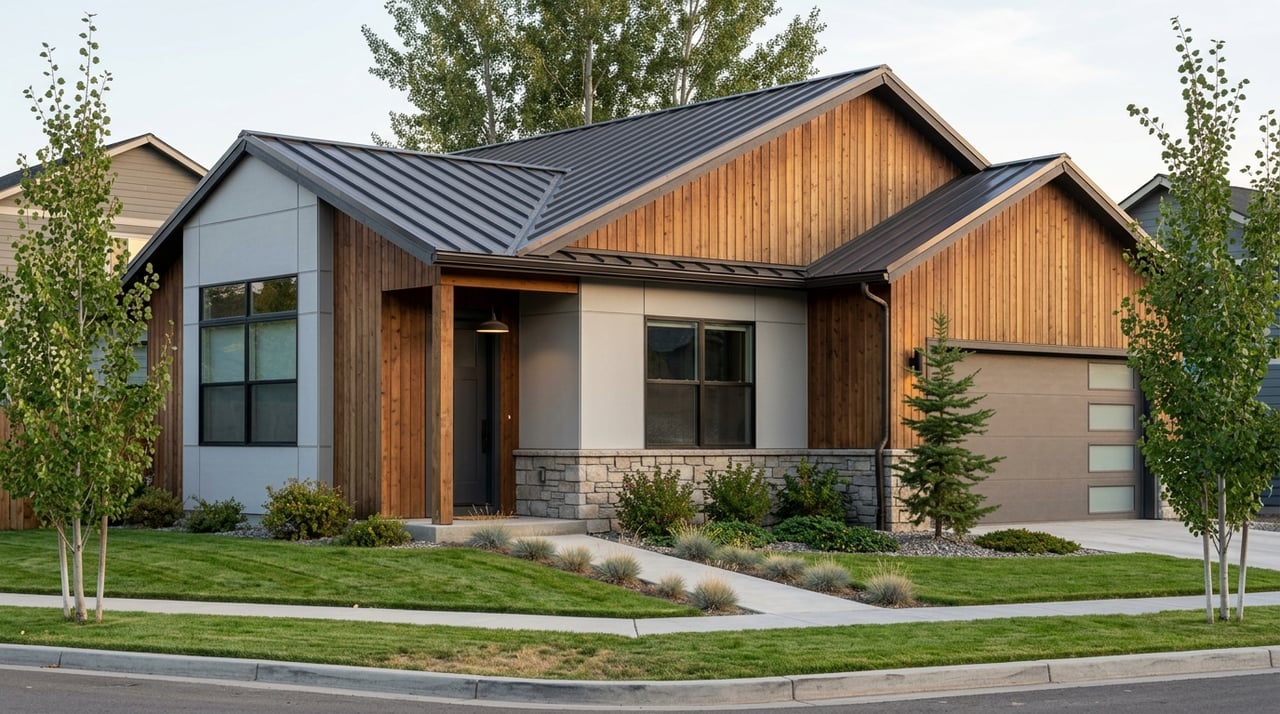
If you are searching for a family-friendly neighborhood in Hailey, you are probably balancing more than square footage. You may be thinking about daily routines, access to parks and trails, commute patterns, and how close you want to be to schools, downtown, or open space. The good news is that Hailey offers several distinct neighborhood options, each with a different mix of walkability, housing style, and room to spread out. Let’s dive in.
Why Hailey Appeals to Families
Hailey is the county seat, largest city, and largest employment center in Blaine County, which gives it a practical, year-round feel that many buyers appreciate. In the city’s 2024 comprehensive plan, Hailey also emphasizes walkability, access to services, parks, and outdoor recreation.
That matters because choosing a neighborhood here is often less about finding one “best” area and more about matching your routine to the right pocket of town. Some neighborhoods make it easier to walk to downtown or school, while others offer newer homes, more open space, or a quieter edge-of-town setting.
What Makes a Hailey Neighborhood Work Well
For many households, a neighborhood works well when it supports everyday life without adding friction. In Hailey, that often means looking closely at trail access, parks, school logistics, and how easily you can move around town.
The city’s planning documents note that State Highway 75 and Main Street remain Hailey’s main north-south corridor, carrying about 12,250 vehicles per day. The same plan also points out that the highway can act as an east-west barrier, which is one reason local connections like River Street, 2nd Avenue, bike lanes, and paths can shape your daily experience in a meaningful way.
Old Hailey and Downtown
Best for walkable in-town living
Old Hailey is the city’s historic residential core, with small lots, a traditional street grid, mature trees, and many older homes. According to the city’s comprehensive plan, this area is known for its established character, while nearby downtown serves as Hailey’s civic and commercial center.
If you want to be close to errands, restaurants, shops, the library, and other day-to-day services, this area stands out. The tradeoff is that yards and off-street parking are often more limited than what you may find in newer subdivisions.
Why families consider this area
For some buyers, the appeal is simple: a more connected routine. You may be able to walk or bike to parts of town more easily, and the central location can make after-school pickups, errands, and weekend plans feel more convenient.
West of River Street also adds another layer to this part of town. The city describes it as a mix of small lots, occasional one-acre lots, multifamily blocks, and mixed-use buildings, giving buyers a wider range of housing types than in some purely single-family neighborhoods.
Woodside and Central Woodside
Best for practical everyday balance
Woodside is often the first neighborhood families look at for good reason. The city describes it as Hailey’s largest neighborhood, its most diverse residential area, and the place with the largest concentration of more moderately priced housing.
It also brings together several practical advantages in one area. Woodside includes Alturas Elementary, Wood River High School, the Community Campus, Keefer Park, and Kiwanis Park, which helps explain why it is often seen as one of the strongest all-around options for households focused on convenience and everyday function.
Why Woodside often rises to the top
If your goal is to stay close to schools, parks, and a mix of housing stock, Woodside is a strong area to study. The neighborhood includes compact single-family housing first platted in the 1960s, along with some newer multifamily and workforce-oriented projects, according to the city.
In a market where affordability remains a broader challenge, that range can matter. Hailey’s comprehensive plan cites a 10-year need for 838 additional housing units in a medium-growth scenario, which helps frame why buyers are often comparing tradeoffs rather than searching for a clearly low-cost pocket.
East Hailey, Sunbeam, Old Cutters, and Quigley
Best for newer homes and trail access
East Hailey tends to appeal to buyers who want a more contemporary neighborhood feel while staying close to town. The city describes this side of Hailey as primarily larger single-family residential, with cottage and duplex pockets plus the still-developing Sunbeam and Quigley subdivisions and Old Cutters.
This area combines newer housing opportunities with strong recreation access. The city’s Sunbeam subdivision information highlights planned park and open space, bike and pedestrian connections, a recreational field, and cottage lots.
Why this area feels family-oriented
East Hailey benefits from a strong network of parks and outdoor access points. Old Cutters Park, Sunbeam Park, and Toe of the Hill access all reinforce the appeal for buyers who want neighborhood recreation built into daily life.
The Wood River Trail is another major draw. This 20-plus-mile paved, year-round non-motorized path connects Bellevue, Hailey, Ketchum, and Sun Valley, which gives many households a flexible way to bike, walk, or recreate beyond their immediate block.
Northridge and Broadford
Best for space and privacy
If your priority is a larger lot and a quieter setting, Northridge and the nearby Broadford edge may be the right fit. The city describes Northridge as Hailey’s northeast edge neighborhood, made up almost entirely of single-family homes on larger lots ranging from roughly 10,000 square feet to more than an acre.
These areas generally feel less walkable than the historic core or some central neighborhoods, but they can offer more privacy and a more open setting. For buyers who value elbow room over being close to downtown, that can be a worthwhile trade.
What to expect here
This part of town tends to fit buyers who want a more residential, edge-of-town feel. It can also appeal if you want quicker access to open land and mountain views while still remaining connected to Hailey’s services and employment base.
In broad terms, this is also where values tend to reflect the premium for lot size and privacy. Based on examples summarized in the research, nearby properties often land higher than more compact neighborhoods in town.
Areas Families Usually Study Less
Not every part of Hailey tends to be a top residential target for relocating households. The city notes that the Airport neighborhood is shaped largely by airport and industrial uses, while South Woodside includes commercial and industrial activity such as the wastewater facility, automotive uses, warehouses, and hardware complexes.
These areas play an important role in Hailey’s economy, but they are usually not the first places buyers focus when the goal is a more traditional residential neighborhood setting.
School Boundaries Matter by Address
Do not assume neighborhood equals school assignment
One of the most important things to know when moving to Hailey is that school assignment is address-based, not simply neighborhood-based. The Blaine County School District attendance guide makes that clear and also notes that living within an attendance zone does not guarantee transportation.
That means two homes in the same general area may not always have identical logistics. If school proximity is one of your top priorities, it is worth verifying the exact address directly with the district before you make a decision.
Key school locations in Hailey
School locations help explain why certain neighborhoods attract more attention from families. Hailey Elementary is located at 520 S 1st Ave, Alturas Elementary at 1111 Alturas Elementary Lane, Wood River Middle School at 900 2nd Ave N, and Wood River High School at 1250 Fox Acres Rd, based on district information.
The district’s quick facts also show the scale of these campuses, with about 445 students at Alturas, 309 at Hailey Elementary, 467 at Wood River Middle, and 922 at Wood River High, according to Hailey Elementary’s school information page. In a relatively small city, those locations can shape how smooth your morning and afternoon routines feel.
Parks, Trails, and Daily Life
Parks are not spread evenly in a way that makes every neighborhood feel the same. The city’s parks information shows clear neighborhood patterns, including Keefer Park and Kiwanis Park in Woodside, several parks and access points in East Hailey, and central options like Hop Porter Park, Lions Park, Roberta McKercher Park, and the skate park closer to downtown.
Hailey also benefits from the Hailey Greenway, which adds riverfront open space and reinforces the city’s strong non-car recreation network. For many buyers, these features are not just amenities. They are part of how a neighborhood supports school pickups, weekend activities, and everyday movement.
A Simple Way to Compare Hailey Neighborhoods
If you want the shortest version, most family buyers tend to compare Hailey neighborhoods like this:
- Old Hailey and Downtown: best for walkability, historic character, and easy access to daily amenities
- Woodside: best for a practical balance of schools, parks, and housing options
- East Hailey, Sunbeam, Old Cutters, and Quigley: best for newer housing, trail connections, and neighborhood recreation
- Northridge and Broadford: best for larger lots, privacy, and a quieter setting
The right fit depends on how you want your day to work. Some buyers want to be near downtown and school routes, while others would rather have more space and a less central setting.
Price Expectations in Hailey
Hailey remains an expensive market by Idaho standards. The research report notes that Redfin reported a median Hailey sale price of $832,500 in March 2026, up 19.1% year over year, which helps explain why buyers are often weighing tradeoffs in lot size, location, and home age rather than searching for a clearly inexpensive neighborhood.
At a high level, the historic core often includes smaller lots and older homes, Woodside is usually the clearest moderate-price family pocket, East Hailey offers a wide range tied to lot and home type, and Northridge or Broadford often command a premium for space. In other words, neighborhood choice in Hailey is often about fit first and price second.
If you are weighing where to land in Hailey, a neighborhood-level strategy can save you time and narrow the search quickly. The right guidance can help you compare commute patterns, trails, parks, school logistics, and housing stock so you can focus on the parts of town that truly match your goals. When you are ready for local insight and a steady, low-pressure approach, connect with Stevenson Real Estate Group.
FAQs
Which Hailey neighborhood is often the most practical for families?
- Woodside is often considered the most practical all-around option because it combines schools, parks, and a range of housing types in one area.
Which Hailey neighborhood is best for walkability?
- Old Hailey and the downtown area usually offer the most walkable in-town lifestyle, with easier access to services, shops, and civic amenities.
Which Hailey neighborhoods have newer housing options?
- East Hailey, including Sunbeam, Old Cutters, and Quigley, tends to offer the strongest mix of newer subdivision-style housing and outdoor access.
Do Hailey school assignments follow neighborhood boundaries?
- No. Blaine County School District uses address-based attendance zones, so you should verify any specific property directly with the district.
Which Hailey areas offer larger lots and more privacy?
- Northridge and the Broadford edge typically offer larger lots, a quieter setting, and more privacy than the more central parts of town.
Are all parts of Hailey equally focused on residential living?
- No. Areas near the Airport and South Woodside are shaped more by airport, commercial, and industrial uses, so they are usually less common starting points for family home searches.