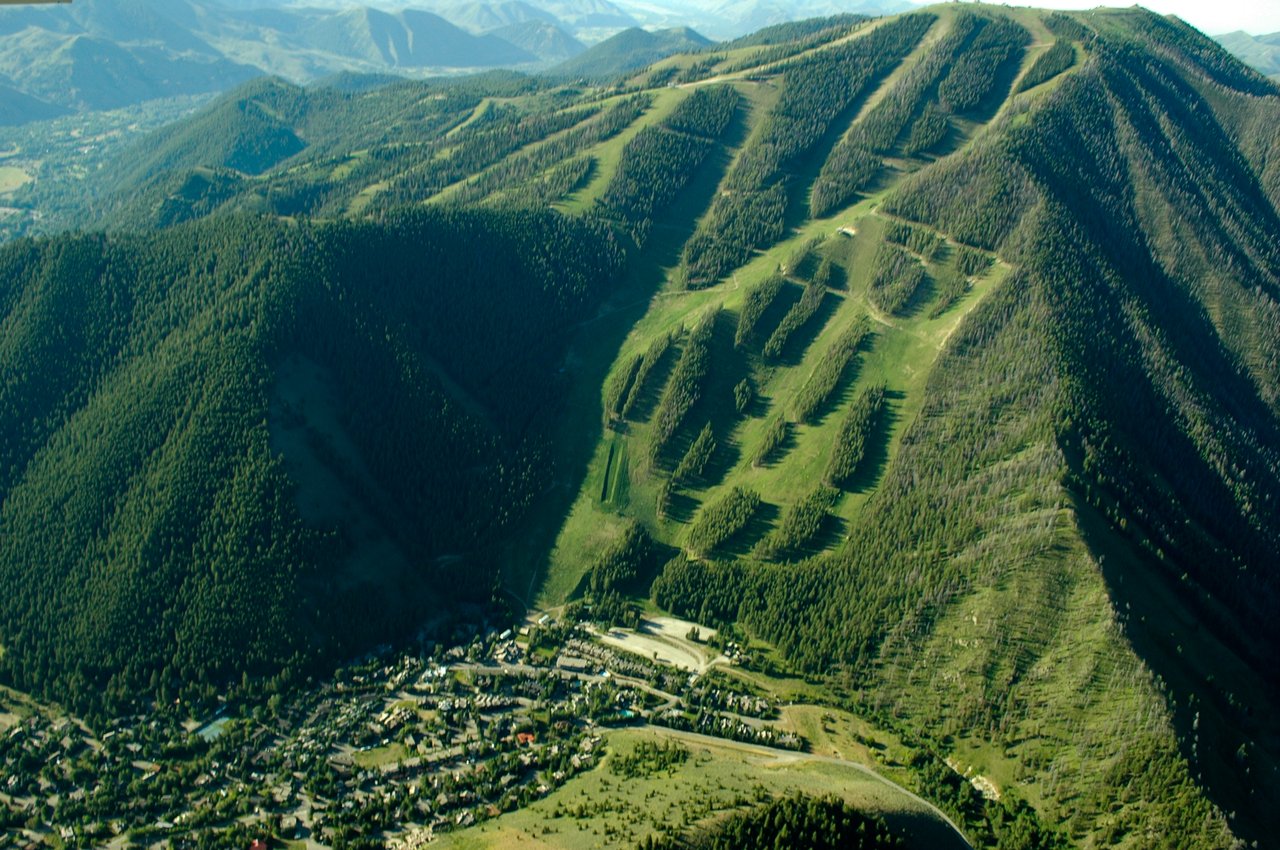
In the summer of 2021, the state of Idaho shut off water to roughly 310 groundwater rights south of Bellevue. The order took effect July 1 and ran through the end of the growing season. It covered a specific, named stretch of Blaine County known locally as the Bellevue Triangle, bounded by the town on the north and U.S. Highway 20 on the south. Wells that had been pumping without incident for decades stopped, not because they ran dry, but because then-Idaho Department of Water Resources Director Gary Spackman determined they were taking water that belonged, by law, to someone else first.
That is the fact a listing price in South Valley never mentions. A few acres in Bellevue can look like the best deal in the Wood River Valley next to what the same money buys in Ketchum or Hailey. But in Idaho, water and land are two separate legal things, and nowhere in this valley has that separation mattered more than right here.
Water Is a Right, Not a Feature of the Land
Idaho follows the prior appropriation doctrine: whoever put water to beneficial use first holds the senior claim, regardless of who owns the ground the water sits under or flows across. A creek running through a property does not mean the owner can use it. A well drilled decades ago does not guarantee the same priority as a neighbor's well drilled decades before that. And a deed transferring land does not automatically transfer the water right attached to it unless the paperwork says so explicitly.
This is exactly what played out in the Bellevue Triangle. Junior groundwater rights there, some tied to irrigation, some to expanding development, were pulled from a shared aquifer that also feeds Silver Creek and the Little Wood River downstream. Senior surface water users on those waterways, some holding priority dates from the 1880s, had already had their own water cut when the junior wells kept pumping. The state's order put it plainly: well water could not be considered available if pumping it injured senior surface rights. Water District 37's watermaster carried out the cutoff.
The following winter, the parties most exposed by that episode negotiated a way to avoid a repeat. The South Valley Ground Water District, the Galena Ground Water District, the Big Wood and Little Wood Water Users Association, and the Big Wood Canal Company signed a mitigation agreement that required junior groundwater users to deliver additional flow to the Little Wood River, acquire storage water, and end most groundwater diversion by August 15 each season. It avoided curtailing about 140 groundwater users across roughly 23,000 acres. That agreement is still the working framework for how this stretch of the valley manages a limited aquifer.
The Same Fault Line Reopened in 2026
None of this is settled history. Idaho just had its second-warmest winter on record and a snowpack that peaked weeks early, and on April 13, 2026, the Idaho Department of Water Resources issued an emergency drought declaration covering all 44 counties in the state, a declaration Governor Brad Little signed the same day. Blaine County's commissioners had asked for it earlier that month, citing drought conditions already affecting close to half the county's population. In the Big Wood basin specifically, snow water equivalent was measured at about 8.1 inches in mid-April, nearly five inches below the median peak for that point in the season.
The declaration allows water users to apply for temporary changes to their rights through the end of 2026 to manage the shortage. It does not curtail anyone automatically. But it puts the same groundwater management area that produced the 2021 shutoff back under active state attention during exactly the kind of dry year that triggered it the first time.
For a buyer comparing South Valley acreage to a similar parcel in Hailey or the Mid Valley, this is the part that doesn't show up in a listing photo. A property inside the Bellevue Triangle with a junior groundwater right is not carrying the same risk profile as a property on municipal water a few miles north, even if the price per acre looks nearly identical.
Surface Water Has Its Own Set of Rules
Not every water source in South Valley comes from a well. The Wood River Valley Irrigation District, formed in 1915, still delivers Big Wood River surface water to the northern part of the Bellevue Triangle through a canal system typically opened by mid-April and closed by October 1, with cuts made by priority when supply runs short. Owning a water right in this district means paying the annual assessment whether the water gets used or not, and it means accepting that the canal's right-of-way runs through adjacent private property. Fences, bridges, and even sprinkler lines near the ditch bank require the district's approval before they go in.
That is a different kind of friction than a groundwater curtailment, but it is friction all the same, and it is worth asking about before an offer goes in on anything described as having water rights attached.
What a Well and a Septic System Actually Cost in 2026
South Valley's rural parcels also tend to sit outside city water and sewer service, which means the buyer, not the seller's asking price, absorbs the cost of putting in a well and a septic system. Current 2026 pricing for both, combined, runs as follows:
| System | 2026 cost range | What drives the price |
|---|---|---|
| Well | $9,000 to $25,000 | Depth to water table, drilling rate per foot |
| Septic | $8,000 to $20,000 | Soil drainage, whether a standard gravity system or an engineered mound is required |
| Combined | $18,000 to $45,000 | Both of the above, plus distance from house site to systems |
Soil that drains well supports a standard gravity septic system. Soil that doesn't, common in parts of this valley, can force an engineered mound or pressure system that roughly doubles the septic cost. A perc test before closing is the only reliable way to know which situation a given lot faces, since a neighboring property's cost is not a safe stand-in for your own.
Blaine County's septic rules add another layer specific to this area. South Central Public Health District, which covers Blaine County, has long applied a roughly one-acre standard per septic system, a stricter policy than the rest of Idaho's public health districts use. That standard exists to protect groundwater quality in a basin already managing tight supply, but it also means the "acreage" advertised in a South Valley listing often can't be subdivided or built out as densely as the raw acre count might suggest.
What the Price Data Actually Shows
Bellevue's home values have room in the top-line numbers to look either affordable or volatile depending on which figure gets quoted. As of July 31, 2026, Zillow's home value index put the average Bellevue home at $696,988, up 9.1% over the prior year. Movoto's tracking of closed sales showed a $1,950,000 median in July 2026, but on a base of just four homes sold that month. A median built on four transactions moves sharply with each individual sale, and it should be read as a snapshot of that month's inventory, not a stable trend line.
Berkshire Hathaway HomeServices' area page for Bellevue, current as of this writing, shows something easy to miss in its inventory: average home size there runs around 2,453 square feet, noticeably below the Blaine County average of 2,887. Some of what looks like a lower price point in Bellevue reflects smaller homes on larger lots rather than a straightforward discount on comparable square footage. Add in the rural acreage listings tracked in late June 2026, where seven parcels of three-plus acres carried a median list price of $1,950,000 at an average of $913 per square foot, and the picture that emerges is a market where land, water rights, and buildable square footage each carry their own separate price, even when a single listing bundles them together.
Questions Worth Asking Before You Write an Offer
- Does the parcel carry a water right, and is it appurtenant to the land or held separately, requiring its own transfer language in the purchase agreement?
- What is the priority date on any groundwater or surface water right tied to the property, and how did it fare during the 2021 curtailment or the 2026 drought season?
- If the parcel sits within an irrigation district, what are the annual assessment and any right-of-way restrictions on the canal or ditch bank?
- Has a soil evaluation or perc test been done, and does the lot meet South Central Public Health District's septic requirements for its size?
- Is the property on a shared well, and if so, what does the existing agreement say about capacity and maintenance costs?
A Few Direct Answers
Does this affect every South Valley property? No. The risk concentrates in the Bellevue Triangle and other groundwater-dependent parcels outside city service. Homes on municipal water and sewer inside Bellevue's limits are not exposed the same way.
Could my domestic well get shut off in a drought year? Wells used strictly for household and livestock purposes have historically continued operating even during curtailment orders aimed at irrigation and larger consumptive uses. The 2021 order specifically targeted consumptive groundwater pumping beyond home and livestock use.
Where can I check a specific parcel's water right? The Idaho Department of Water Resources maintains searchable records by name, location, or water right number, and a title company can confirm what is set to transfer with the sale.
South Valley's open space is real, and so is its appeal. It just prices differently than it looks on paper, and the difference lives in paperwork most buyers don't think to ask for until it's too late to negotiate. Stevenson Real Estate Group works through water rights, well and septic questions, and irrigation district details before an offer goes in, not after. Explore Sun Valley Homes to see what's currently available across Bellevue and the rest of the Wood River Valley.