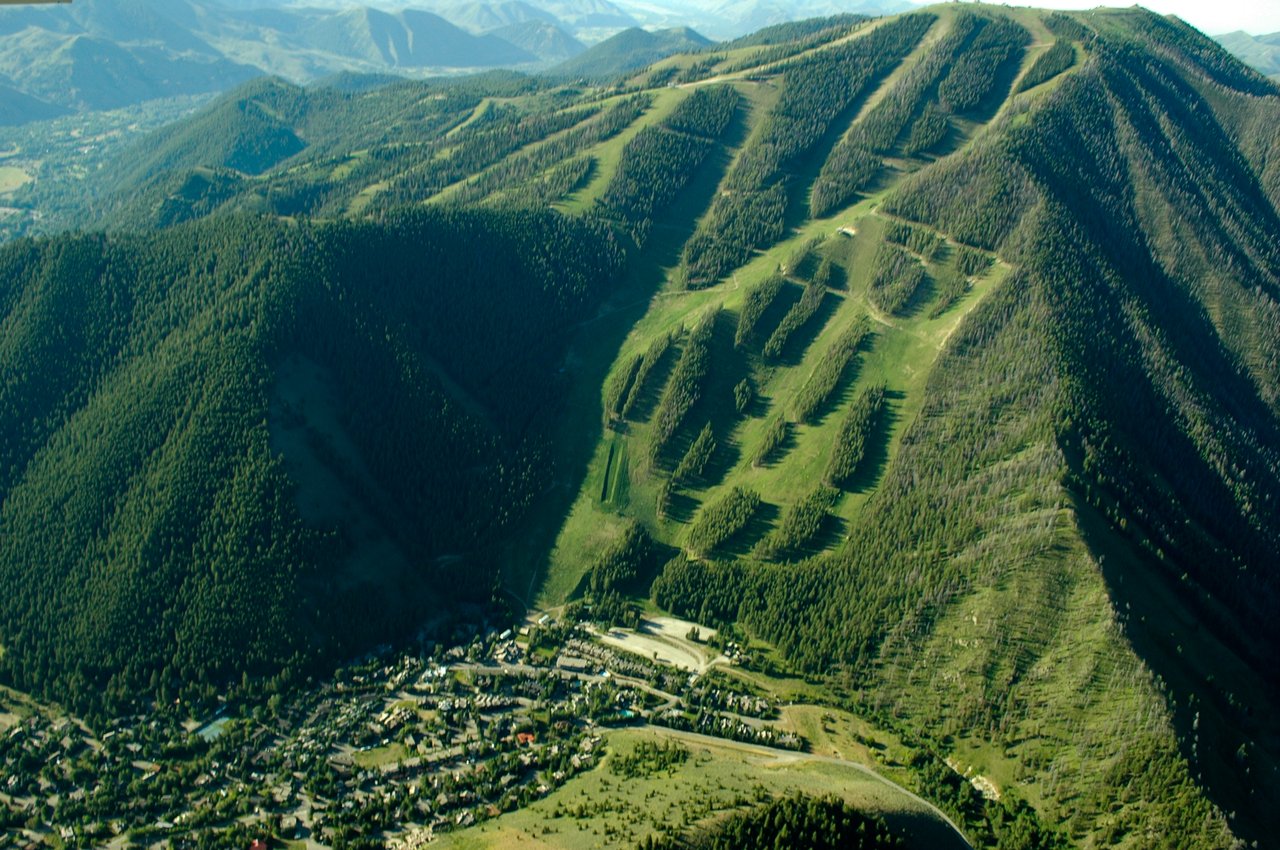
Ketchum has its boardwalk of galleries and restaurants. Hailey has Main Street, the Liberty Theatre, and a courthouse square you can walk to in ten minutes from almost anywhere in town. Mid Valley, the stretch of Highway 75 between them that includes Gimlet, East Fork, Greenhorn Gulch, Golden Eagle Ranch, Deer Creek, and Broadway Run, has none of that. There's no downtown to anchor it, no single street where neighbors run into each other buying coffee. If you live out here, your neighborhood is really a string of drainages and side roads that happen to share a zip code more than a center.
So what actually holds Mid Valley together as a place people recognize and talk about? Two things, and neither one is a building. One is a garden nonprofit that redraws the map every July by choosing which six backyards the rest of the valley gets to see. The other is a paved path that never asks anyone's permission and simply runs the same twenty miles it always has, connecting Bellevue to Ketchum whether or not anyone notices.
A Nonprofit Redraws the Map Every Summer
The Sawtooth Botanical Garden sits five miles south of Ketchum, which puts it squarely in Mid Valley territory, and every July its board spends the previous eleven months quietly scouting private gardens for the annual tour. This year's event, held July 25 and now in its 31st year, focused on East Fork and Greenhorn Gulch. Six gardens opened their gates. The year before, the 30th anniversary tour drew more than 600 people, a number that says something about how much appetite there is in this valley for a look inside a neighbor's fence line.
Kathie Gouley, who chairs the garden's board, described the selection process in terms that make clear this isn't a formal survey. Once the current tour wraps, the committee takes a short break before starting to scope out next year's route.
"We'll be looking over fences and peeking around corners."
That's not a metaphor. It's how six private properties in a neighborhood with no shared public space end up becoming, for one Saturday a year, the closest thing Mid Valley has to a civic gathering.
What the Tour Actually Showed This Year
The specifics matter here because they're the kind of detail a generic roundup skips past. Landscape architects were posted at Garden #2 and at Garden #4 in Golden Eagle Ranch, and again at Garden #5 in Greenhorn Gulch, giving tour-goers someone to ask real questions of rather than just admire from a path. For the first time in the tour's history, a harpist performed at Garden #1. Artists Brooke Vagias, Kimber Traue, and Poo Wright-Pulliam sat in various gardens throughout the day, sketching or painting whatever caught their attention. Wright-Pulliam, a local birder and naturalist, doubles as something close to an informal garden expert in her own right.
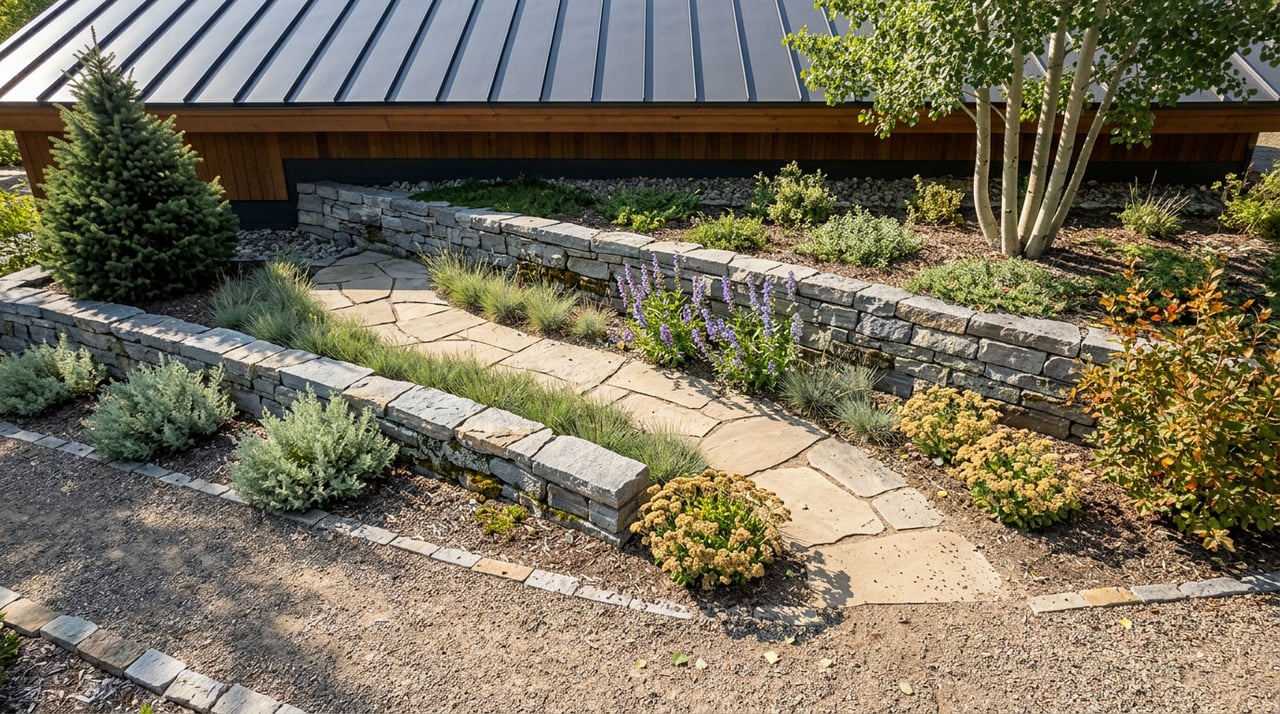
Garden #5 belonged to Katie and John MacCarthy, on two and a quarter acres set on a hillside with little natural shade, a tough site for a garden by any measure. Rather than fight the conditions, the design leaned into them: a firewise layout by Ben Young Landscape Architect that treats fire resistance as the organizing principle rather than an afterthought. John MacCarthy chairs the board of the Idaho Nature Conservancy, and the property sits near a trailhead in what's also described as a wildlife corridor, which made the fire-resistant design choice as much practical as aesthetic.
None of these gardens will be on next year's tour. The committee has already said it will look at properties stretching from East Fork to north Hailey for 2027, which means this year's map of Mid Valley as a garden destination is temporary by design. That's the mechanism worth understanding if you live here: the neighborhood's identity as a place worth touring gets reassembled from scratch every summer, six houses at a time.
The Garden Itself Keeps Working After the Tour Leaves
The tour is one day. The Sawtooth Botanical Garden itself runs through the season, open Memorial Day weekend through the first Sunday in October, Monday through Saturday from 9 a.m. to 5 p.m., with the visitor center closed on Sundays but the grounds still open to walk through. Admission is seven dollars a person, free for kids under 12, members, seniors over 65, veterans, and tribal members.
What's actually there, beyond the tour-day crowds, are five distinct biome gardens meant to represent the range of ecosystems found across south-central Idaho at elevation, a sculpture garden, and a contemplative space built around what's described as the only Dalai Lama-blessed prayer wheel in the country, created in 2005 to mark his visit to the valley. There's also the Sawtooth Sandbox, a play space gifted by the Dondero family, tucked near a stream where kids catch water skippers while parents sit in the shade. None of this requires a tour ticket. It's simply open, right now, through early October, to anyone who lives close enough to walk in on a random Tuesday.
Why August Belongs to Greenhorn Gulch, Not July
If the garden tour is the event that briefly turns Mid Valley into a destination, the Greenhorn Gulch trail system is the infrastructure that keeps it one year-round. The trailhead sits about six miles south of Ketchum, then four more miles up Greenhorn Gulch Road, and from there a network branches out that includes Cow Creek Trail, Mahoney Ridge, Mahoney Butte, the Greenhorn Trail itself, and connections into Imperial Gulch and Lodgepole Gulch. The Forest Service's Ketchum Ranger District manages the land, but the trail's usability owes a lot to the Wood River Bike Coalition and Wood River Land Trust, which led restoration work after a 2014 fire tore through much of the drainage.
Community ride-log data collected by Trailforks shows August as the single most active month for the Greenhorn system all year, ahead of the wildflower-heavy weeks of June and July. That's worth sitting with for a second, because it cuts against the instinct that peak season here is early summer. By August, the burn-scarred sections have mostly greened back over, the creek crossings that flood out early-season hikers have settled down, and the aspens along Imperial Gulch haven't started turning yet. It's also worth knowing before you go that every trail in the Greenhorn system is officially multi-use, meaning motorcycles share the singletrack with hikers and mountain bikers. That arrangement isn't an accident. Idaho Department of Parks and Recreation off-highway vehicle sticker fees helped fund much of the original trail development back in the late 1970s and early 1980s, and the motorcycle community still shows up each spring to help clear downed trees before the hiking season starts in earnest.
The Path That Actually Holds This Together
Underneath both of these, quietly, is the Wood River Trail, which locals simply call the bike path. It runs as a paved spine parallel to Highway 75, stretching more than 20 miles between its endpoints in Ketchum and Gannett Road in Bellevue, with additional loops and spurs at the northern end bringing the total network closer to 36 miles. Branches peel off toward East Fork Road and the old mining community of Triumph, into Greenhorn Gulch, and out toward Elkhorn and Warm Springs. For a lot of Mid Valley residents, it's the fastest way to get from a driveway in Gimlet to a coffee shop in Ketchum during peak summer traffic, faster in some cases than driving Highway 75 itself once you account for parking.
A late-August week here, if you're already living it rather than reading about it from somewhere else, might look something like this:
- Walk the Sawtooth Botanical Garden's biome gardens on a weekday morning before the heat sets in, since the grounds stay open even outside tour season.
- Check current conditions before heading up Greenhorn Gulch Road, since it's peak month for both hikers and dirt bikes sharing the same singletrack.
- Ride the bike path stretch between Gimlet and Ketchum instead of driving it, particularly on weekends when Highway 75 traffic backs up near town.
- Watch for next year's garden tour scouting to begin once this year's six gardens have had their one Saturday in the spotlight.
None of this requires Mid Valley to have a Main Street. It has something that functions the same way, just distributed across a nonprofit's rotating guest list and a strip of asphalt that doesn't care whose backyard it's passing.
If you're weighing what it actually means to live in this stretch of the valley, from the pace of a summer weekend to how property here relates to Ketchum and Hailey on either side, the team at Matthew Stevenson has spent years working these exact neighborhoods and is glad to talk through what you're seeing on the ground.