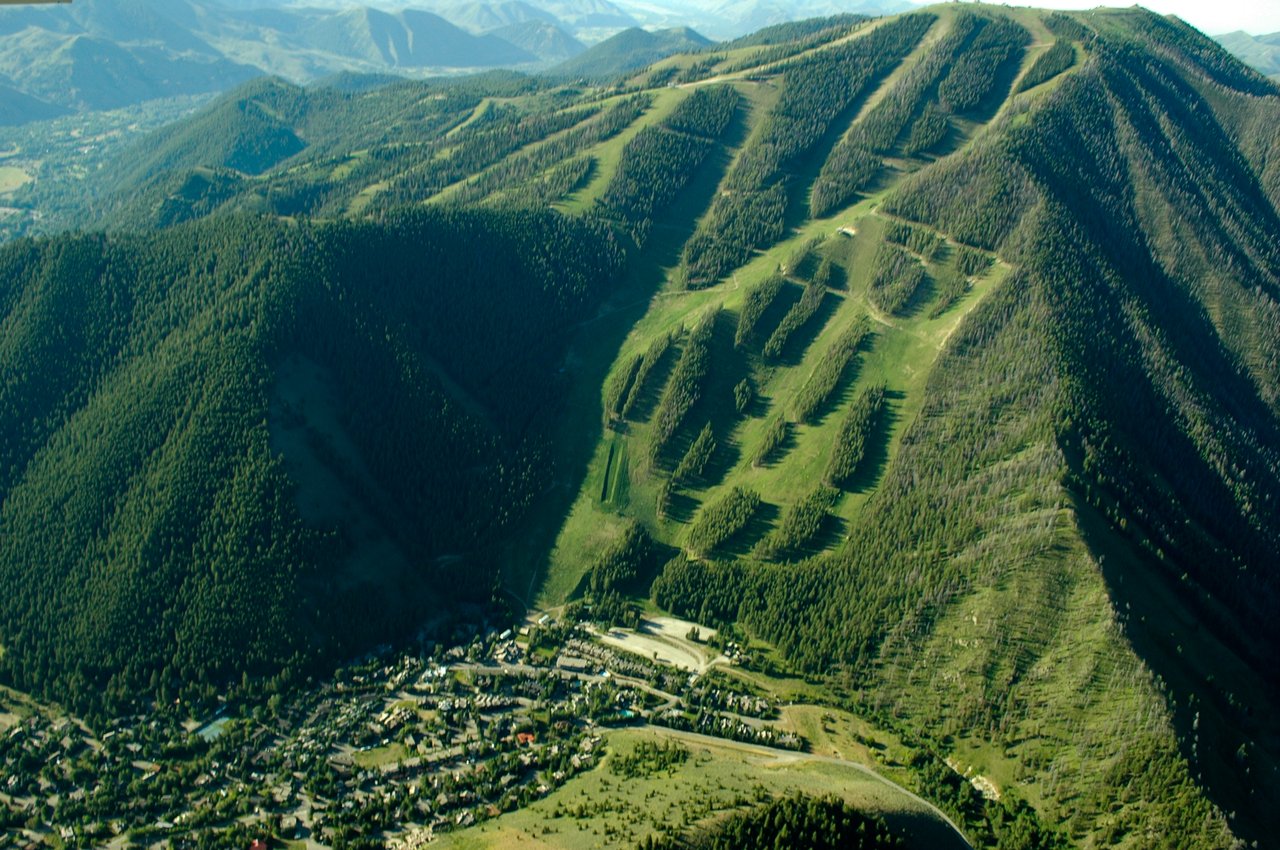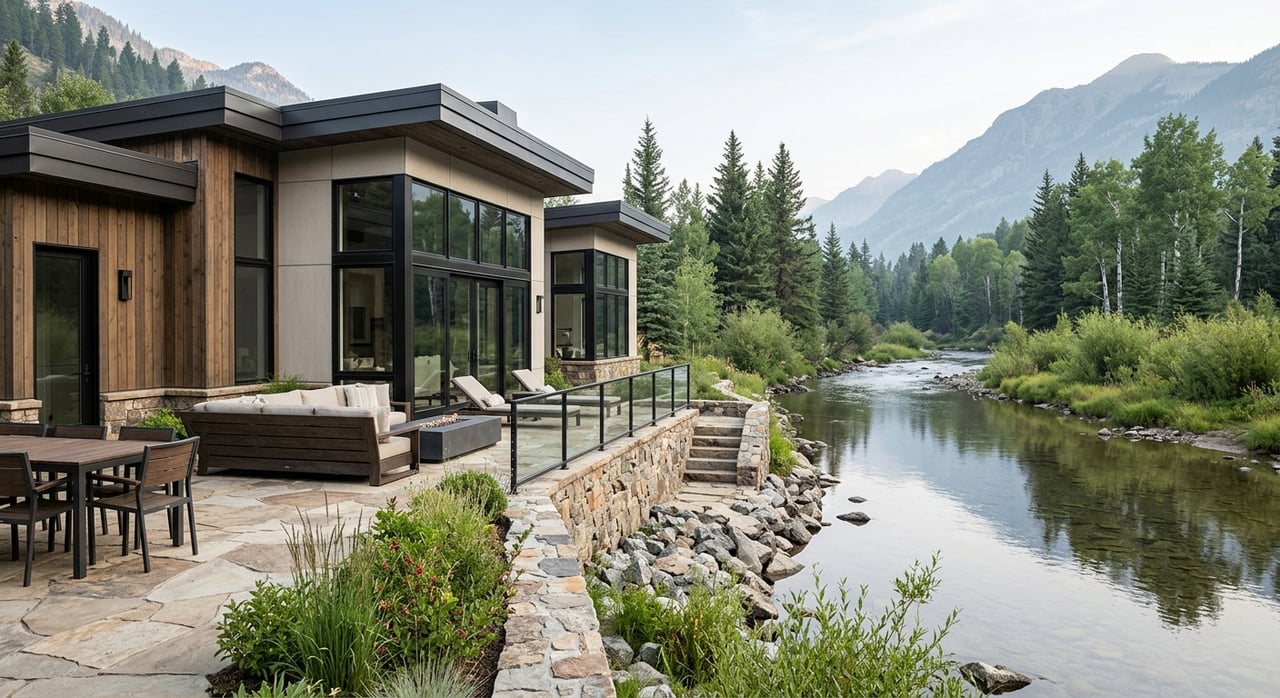
If you are looking at Mid Valley property, the words riverfront and view lot can sound simple. In reality, they can mean very different things for privacy, buildability, insurance, and long-term value. The good news is that once you know what to look for, you can evaluate these properties with much more confidence. Let’s dive in.
Why Mid Valley properties stand out
Mid Valley sits between Ketchum and Hailey, and current listing examples show a mix of parcel types, from compact in-town lots to larger river and view properties. One current listing at 102 W Channel Ln explicitly identifies the property as Mid Valley between Ketchum and Hailey.
That range matters if you are comparing homesites or weighing resale potential. In-town lots in Hailey and Ketchum can be under a quarter-acre, while Mid Valley riverfront and view parcels often stretch from about 1 acre to 5 acres or more. In practice, that means your buying decision is often less about acreage alone and more about how the land can actually be used.
Mid Valley lot sizes vary widely
Current examples in the Mid Valley corridor show that riverfront holdings come in many sizes. Properties such as 146 River Bend Ln, 114 Abby Rd, and larger estates in the corridor illustrate a spread from under an acre to several acres.
Non-frontage acreage parcels also tend to cluster in the 1-to-5-acre range. Listings like 102 Willow Rd and 83 Pioneer View Dr show how view-oriented land can offer more elbow room without direct river frontage.
Smaller lots still play an important role in the market. Hailey examples like 201 Alturas Dr show that compact sites can still attract strong interest when buildable land is limited.
Riverfront does not always mean water rights
This is one of the most important points for buyers to understand. According to the Idaho Department of Water Resources overview of water rights, Idaho water law is based on appropriation, not riparian ownership.
In simple terms, owning land next to the river does not automatically give you the right to divert or use that water. A water right is a separate real property right tied to beneficial use and priority date. IDWR also notes that unused rights can be lost after five continuous years of non-use, and that ownership changes should be reported.
If a Mid Valley parcel advertises irrigation, water delivery, or rights tied to the land, those items should be confirmed directly. It is wise to review title materials and relevant IDWR transfer information before assuming anything is included.
Floodplain rules matter on river parcels
Riverfront property often delivers privacy, natural beauty, and a strong sense of place. It can also come with more planning and permitting complexity than an in-town lot.
Blaine County’s Big Wood River Atlas 2020 was developed after the 2017 flooding to help guide restoration, flooding, and channel migration management. The county notes that riparian corridors support water quality, bank stability, flood reduction, recreation, and scenic beauty.
Those goals shape the rules buyers need to understand. Under the county’s floodplain regulations, floodplain development is expected to avoid adverse impacts, and construction in regulated areas must meet elevation and flood-resistance standards. The county says first floors and mechanical systems must be at least two feet above the mapped flood level.
For some financed purchases, flood insurance may also be required. FEMA explains that mandatory flood insurance purchase requirements can apply in Special Flood Hazard Areas, and lenders may also require coverage in some moderate-risk cases.
Riparian setbacks can limit usable land
A parcel may look spacious on paper but still have meaningful limits on where you can build. Blaine County treats the Big Wood River as a Class 1 stream, and the county’s riparian regulations establish a 75-foot riparian setback.
Within that setback, restrictions can apply to activities such as construction, fill, septic installation, vegetation removal, and other ground disturbance. County rules also indicate that new lots need a buildable site outside the floodplain and riparian setback, and that subdivision design should consider future river movement.
That is why gross acreage can be misleading. A larger parcel is not always more functional if the buildable envelope, septic area, or access is constrained by floodplain or riparian overlap.
View properties offer a different value story
Not every premium Mid Valley property sits directly on the river. Some of the strongest value can come from parcels that combine mountain views, privacy, and proximity to the river corridor without direct frontage.
Current examples support that idea. 83 Pioneer View Dr offers over 5 acres with mountain views and nearby river access, while other Mid Valley view parcels show that buyers will often pay for scenery, setting, and usable space even without waterfront ownership.
For many buyers, a view property can reduce some of the friction that comes with direct river frontage. You may still want to review access, building envelopes, and utility questions carefully, but the overall risk profile can be different from a parcel directly along the Big Wood River.
What drives value in Mid Valley
Current listing examples show a wide pricing range, and that spread tells an important story. A small Hailey lot like 201 Alturas Dr is priced very differently from larger Mid Valley river parcels, while premium frontage and estate-scale offerings can rise into the multi-million-dollar range.
The biggest value drivers appear to be:
- Usable buildable area
- Privacy from roads and neighboring homes
- View quality
- Legal water access or irrigation rights, if any
- Floodplain exposure and permitting complexity
- Confidence in septic, access, and development feasibility
Blaine County code and current listings together suggest that usable envelope matters more than raw acreage alone. A 3-to-5-acre parcel with clear buildability and strong views may compete well with a larger tract that faces floodway limits or setback issues.
What buyers should verify early
If you are seriously considering a riverfront or view property in Mid Valley, early due diligence can save time and money. These are some of the most important items to confirm before you treat a parcel as fully usable:
- Verify the buildable envelope and whether it sits outside key floodplain and riparian constraints.
- Confirm septic and drainfield locations and whether they conflict with setbacks or other site limitations.
- Review whether any irrigation delivery, easement, or water right is actually included.
- Check whether ownership changes for water rights need to be recorded with IDWR.
- Ask whether the parcel lies in a FEMA Special Flood Hazard Area and whether flood insurance may be required.
- Look at how privacy, access, and topography affect the real day-to-day feel of the property.
These steps are especially helpful for remote buyers who may be comparing Mid Valley land from afar. On paper, two properties can look similar, but their real-world usability can be very different.
A practical way to compare parcels
When you compare Mid Valley properties, it helps to think in layers rather than just price per acre. A simple framework can keep your search grounded:
Start with the setting
Look at river frontage, mountain views, road exposure, and the overall sense of privacy. These features often drive first impressions and long-term enjoyment.
Then evaluate buildability
Review setbacks, floodplain maps, possible building envelopes, and any obvious site constraints. This is the layer that often separates a beautiful parcel from a practical one.
Finish with carrying costs and risk
Consider insurance, site work, utility extensions, and permitting complexity. A lower-priced parcel may not be the better value if development costs or restrictions are significantly higher.
Why local guidance matters
Mid Valley properties can be rewarding, but they are rarely one-size-fits-all. A riverfront parcel may be ideal for one buyer because of privacy and direct natural setting, while a view lot may be the better fit for another buyer who wants scenery with fewer land-use complications.
That is where careful local guidance makes a difference. When you understand the tradeoffs between frontage, views, buildability, and regulation, you can make a more informed decision and protect your long-term investment.
If you are weighing riverfront versus view property in Mid Valley, Stevenson Real Estate Group can help you compare opportunities with clear, local insight and a steady, low-pressure approach.
FAQs
What makes a Mid Valley riverfront property different from a view property?
- A riverfront property offers direct frontage along the river corridor, while a view property may focus more on scenery, privacy, and usable land without direct water frontage.
Do Mid Valley riverfront homes automatically include water rights?
- No. According to IDWR, owning riverfront land does not automatically give you the right to divert or use water, so water rights must be verified separately.
Why is usable acreage important for Mid Valley land?
- Usable acreage matters because setbacks, floodplain overlap, septic needs, and access can limit where you can actually build, even on a large parcel.
Can flood insurance be required for Mid Valley riverfront property?
- Yes. If a parcel is in a FEMA Special Flood Hazard Area, mandatory flood-insurance rules can apply to financed purchases, and some lenders may require coverage in other situations too.
What should buyers check before buying a Mid Valley view lot?
- Buyers should confirm the buildable envelope, septic feasibility, access, floodplain status, and whether the parcel’s views and privacy match their goals.