How did Sun Valley, Idaho become America's first ski resort?
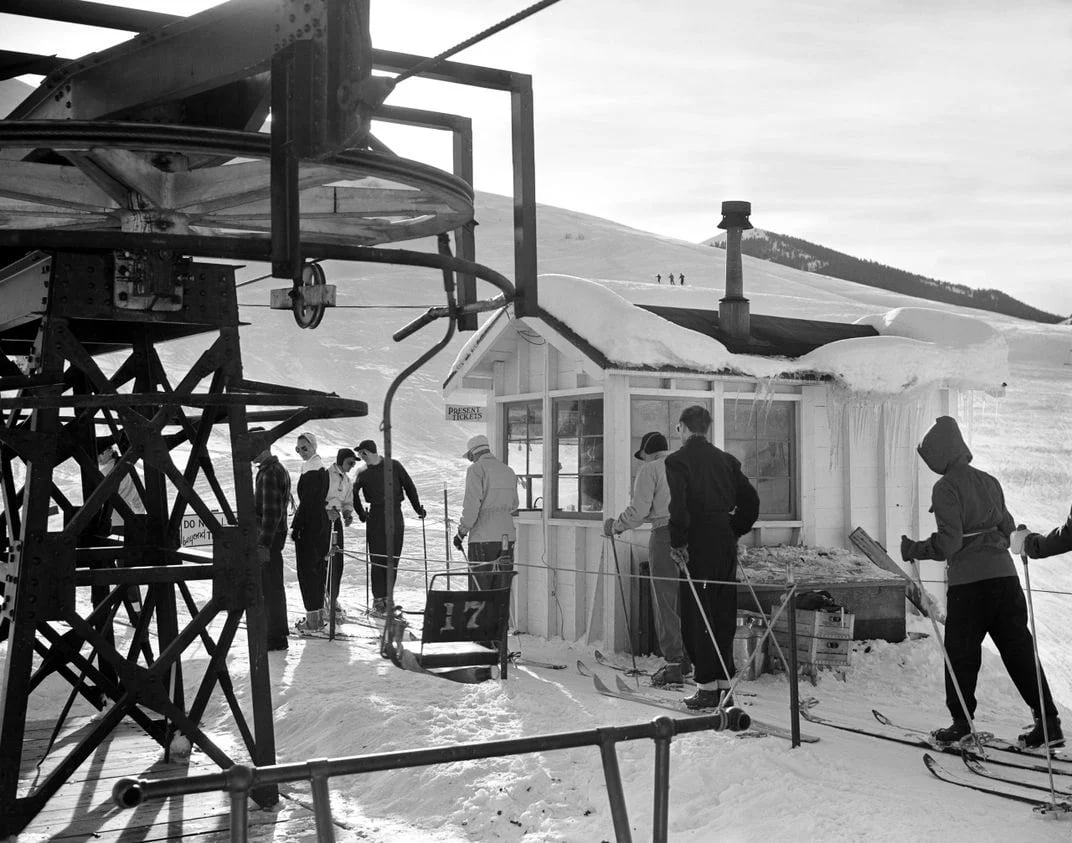
In 1936, Union Pacific Railroad chairman Averell Harriman built Sun Valley Resort from scratch on a former sheep ranch outside the mining town of Ketchum, spending $1.5 million on a 220-room lodge in just seven months. Because there was no good way to get skiers up the mountain, Harriman had a railroad engineer — who'd previously designed rigs for hoisting bananas onto cargo ships — invent an entirely new piece of equipment: the chairlift. It debuted at Sun Valley that December, and every ski resort in the world has used some version of it ever since.
By Stevenson Real Estate Group | August 10, 2026
Ketchum wasn't supposed to become one of the most desirable mountain addresses in the country. It was supposed to become a sheep town with a played-out silver mine and not much else. The reason it didn't is a story about a railroad executive with a very specific problem, a European count sent out on a strange assignment, and an engineer who'd spent his career figuring out how to move fruit.
It's worth knowing this story if you're buying, selling, or just trying to understand why this valley looks and feels the way it does today.
A Railroad Executive's Very Expensive Idea
In 1935, Averell Harriman — chairman of the Union Pacific Railroad — decided his company needed a destination. Alpine skiing was catching on in the United States after the 1932 Winter Olympics in Lake Placid, and European resorts were already drawing wealthy American travelers overseas. Harriman wanted to build something in the Rockies good enough to keep those travelers, and Union Pacific's passengers, at home.
He hired an Austrian count, Felix Schaffgotsch, to scout the American West for the right site. Schaffgotsch reportedly rejected spot after spot — not enough snow, not enough sunshine, not enough of the right kind of terrain — until he reached the old mining town of Ketchum, Idaho, in the winter of 1935–36.
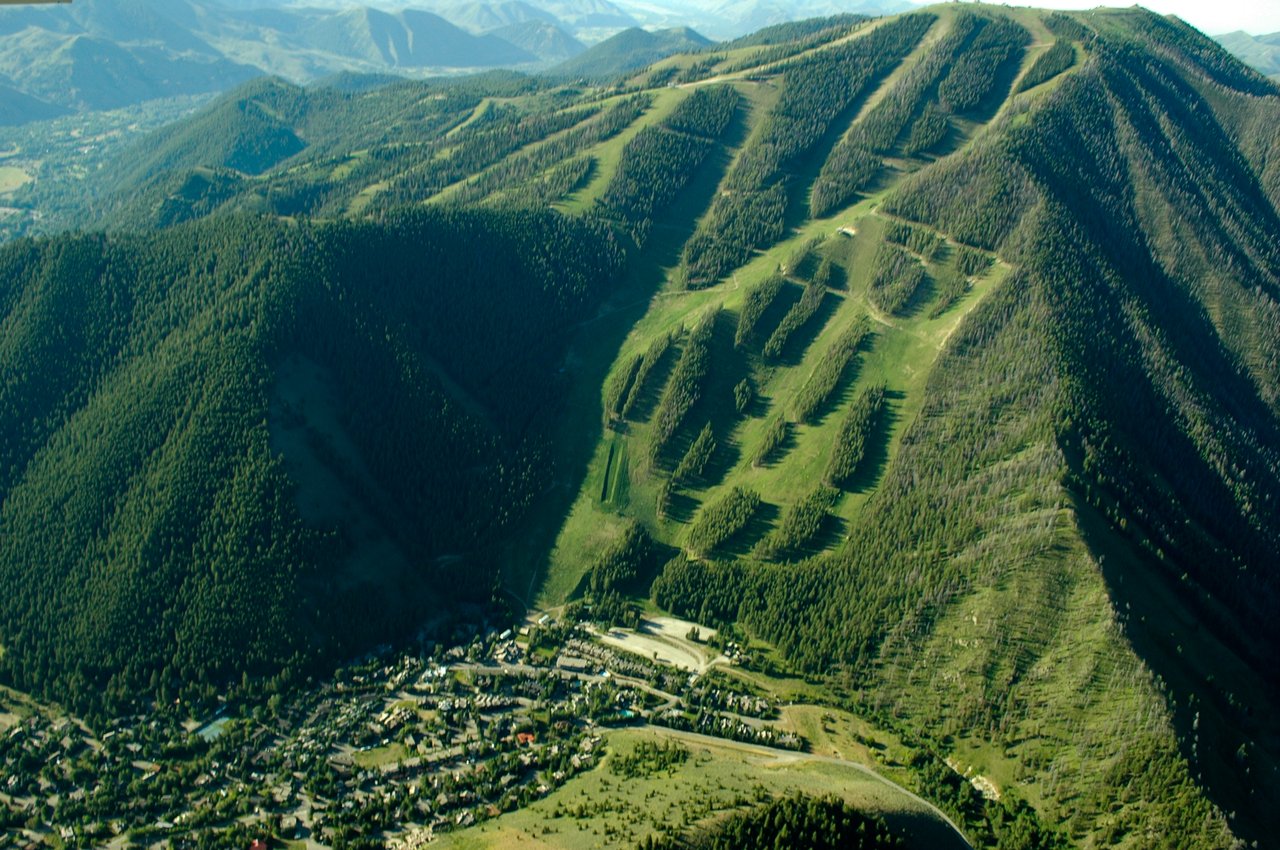
What he found was a small, rough valley with reliable powder, big vertical relief on Dollar and Proctor Mountains, and almost nothing built up around it. Harriman moved fast. Union Pacific bought the old Brass Ranch, and in about seven months — at a cost of roughly $1.5 million, a serious sum in 1936 — crews built a four-story, 220-room lodge and cut the valley's first ski runs.
That lodge, and the resort that grew up around it, is the reason Ketchum exists today as a market with luxury homes, world-class dining, and a year-round outdoor economy instead of a quiet Idaho mining town that time forgot.
Ketchum had been through a boom before Harriman ever showed up. Silver drew prospectors here in the early 1880s, and for a while the town was a genuine mining center — until the market crashed in 1893 and left the valley to sheep ranchers for the next four decades. By the time Schaffgotsch arrived, Ketchum was a quiet ranching town with good bones and almost no competition for the site Union Pacific needed. Harriman didn't build Sun Valley on empty land. He built it on top of a town that had already boomed and gone quiet once before.
The Sun Valley Lodge opened to immediate national attention. Hollywood and East Coast society followed the railroad's marketing west almost overnight — Gary Cooper, Clark Gable, and Ernest Hemingway were all early regulars, and Hemingway eventually made Ketchum his home for the last years of his life. (We've written separately about Hemingway's history in the valley, if you want the fuller story.) That early celebrity draw is part of why Sun Valley built a reputation as a discreet, high-end destination from its very first season, rather than growing into that reputation slowly over decades the way most resort towns do.
The Banana-Boat Engineer Who Solved the Mountain's Biggest Problem
Building runs and a lodge solved half the problem. The other half was getting skiers up the mountain without freezing them or breaking their legs on the rope tows and open sleds resorts used at the time.
Harriman wanted something better — something that felt like the passenger experience Union Pacific was known for. So he turned to one of his own engineers, James Curran, and asked him to design a way to carry skiers up the mountain in comfort.
Curran's background was an odd fit for the job on paper. He'd spent time designing equipment for hoisting bananas onto cargo ships in the tropics — a completely different problem, but one that turned out to involve exactly the kind of continuous-loop, load-and-release mechanics a ski lift needed. Curran adapted that idea, added a seat, and built the first chairlift.
It debuted at Sun Valley in December 1936, right alongside the resort's opening season. Nothing like it existed anywhere else in the world. Within a few years, the design had spread to nearly every ski area in North America and, eventually, everywhere skiing exists today.
- 1935: Harriman commissions Felix Schaffgotsch to scout resort sites in the Rockies
- 1935–36: Schaffgotsch selects the old Brass Ranch near Ketchum
- 1936: Union Pacific builds the Sun Valley Lodge and cuts runs on Dollar and Proctor Mountains — total build time, about seven months
- December 1936: The world's first chairlift opens alongside the resort
Ninety Years Later, the Bones Are Still There
Sun Valley Resort just wrapped its 90th anniversary season, adding roughly 90 acres of new gladed terrain and marking nine decades since that first chairlift ride. What's remarkable, walking around Ketchum and Sun Valley today, is how much of the original vision is still visible. The lodge is still there. The mountains Schaffgotsch picked are still the mountains people come here to ski. The scale still feels intentional rather than accidental — because it was.
That's not just a nice story for visitors. It's part of why buying property here works differently than it does in most mountain towns. Ketchum and Blaine County enforce genuinely strict Mountain Overlay and Design Review guidelines — limits on building height, exterior color, and lighting — specifically to protect the look this history created. If you're considering an exterior remodel on a home near Bald Mountain or Warm Springs, that review process traces its logic directly back to a resort built to feel a certain way on purpose in 1936.
We talk about this history with a lot of our out-of-state buyers, because it answers a question they're usually already asking without quite knowing it: why does this place feel so consistent, architecturally, compared to other resort towns that have grown up more haphazardly? The answer is that it was designed that way from the start, and the community has spent nine decades protecting that design. It's also part of what we walk through with clients comparing Ketchum against Sun Valley as a home base — the two towns grew up around the same 1936 vision but have taken slightly different shapes since.
If you're weighing a purchase in a neighborhood with design-review requirements, thinking about managing a second home here from a distance, or trying to understand what “protected character” actually means for a future remodel, that's exactly the kind of question we walk buyers through before they write an offer.
Frequently Asked Questions
Who founded Sun Valley, Idaho?
Sun Valley Resort was founded by Averell Harriman, chairman of the Union Pacific Railroad, who built it in 1936 as a destination ski resort meant to attract wealthy travelers who were otherwise heading to Europe to ski.
Where was the world's first chairlift built?
The world's first chairlift was built at Sun Valley, Idaho, and opened in December 1936. It was designed by Union Pacific engineer James Curran, who adapted mechanics he'd previously used to design equipment for loading bananas onto cargo ships.
Was Ketchum, Idaho a mining town before it became a ski resort?
Yes. Ketchum was founded during Idaho's silver mining boom of the early 1880s and had largely shifted to sheep ranching by the time Union Pacific selected the nearby Brass Ranch as the site for Sun Valley Resort in the mid-1930s.
Why does Ketchum have strict design review rules for homes?
Ketchum and Blaine County's Mountain Overlay and Design Review guidelines limit building height, exterior color, and lighting to preserve the mountain aesthetic that dates back to Sun Valley Resort's original 1936 design. Homes near landmarks like Bald Mountain or Warm Springs typically need municipal Design Review approval before major exterior remodels.
How old is Sun Valley Resort?
Sun Valley Resort opened in December 1936 and completed its 90th anniversary ski season in 2025–26, making it one of the oldest continuously operating destination ski resorts in the United States.
Ninety years on, Sun Valley's history isn't just a fun fact for visitors — it's baked into the design rules, the property values, and the character of nearly every neighborhood in this valley. If you're trying to understand what that means for a specific property, whether you're buying, selling, or planning a remodel that touches Design Review, we're happy to walk you through it. Reach out anytime.
Image: Sun Valley Co.
About Stevenson Real Estate Group
The Stevenson Group has decades of experience in Sun Valley, and use that historical knowledge to help long-time and new clients achieve their real estate goals. Selling everything from remote mountain lodges in the Sawtooths to luxury estates on the Big Wood River to starter homes in the South Valley, Gayle, Matt and team consistently get the job done like few other agents or teams in the market.