What is the history behind Ketchum's Wagon Days celebration?
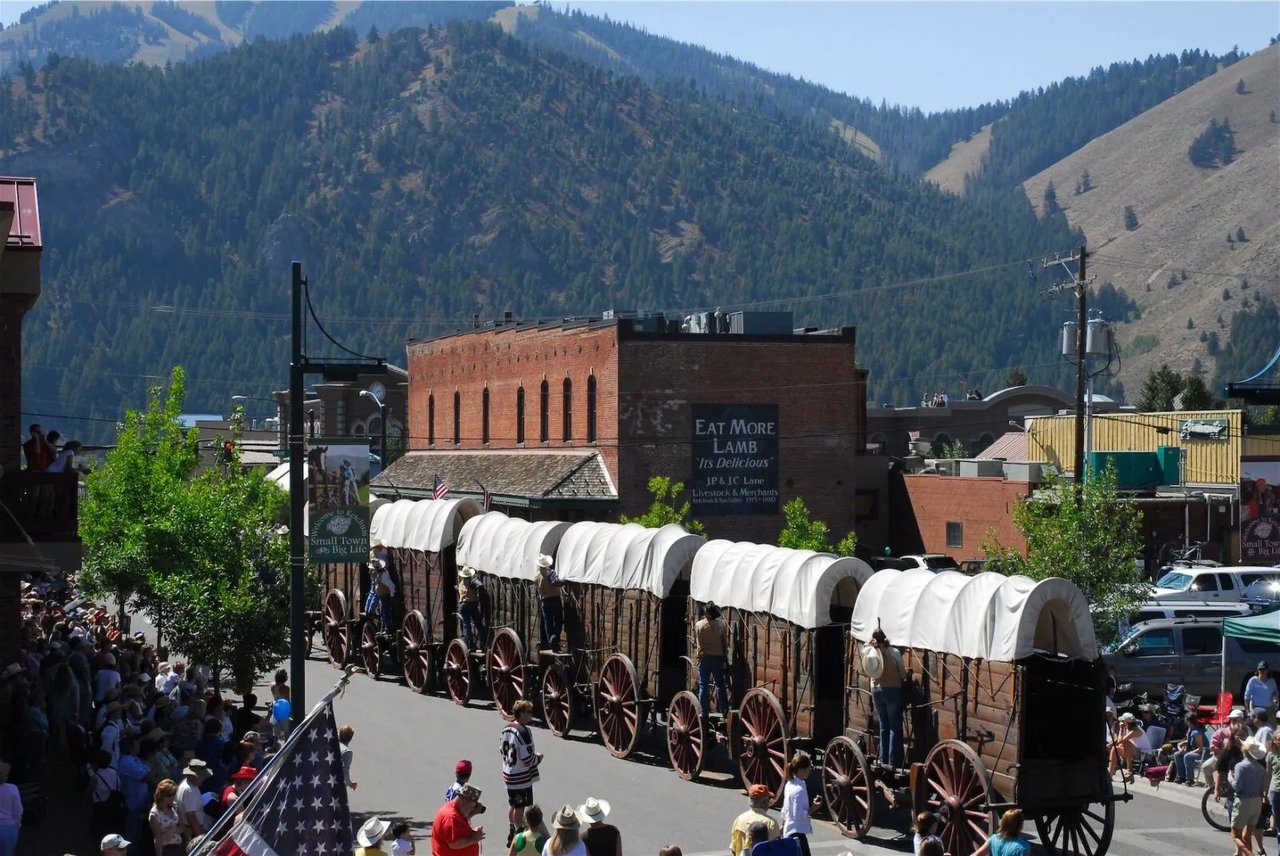
Wagon Days traces back to 1958, when the Lewis family donated the "Big Hitch" — six authentic ore wagons once pulled by twenty-mule teams between Ketchum and the silver mines above the valley — to the city for public display. What started as a small parade for a few hundred spectators has grown into one of the largest non-motorized parades in the West, drawing more than 15,000 people to Ketchum's Main Street every September.
Twelve miles up East Fork Road from Hailey, past where the pavement narrows and the canyon walls close in, sits a cluster of old buildings that most people driving through the Wood River Valley have never heard of. It's called Triumph, and for about seventy years it was one of the reasons Ketchum existed at all.
You won't find it on the resort maps. But if you're curious about why Ketchum looks and feels the way it does — and why the whole town shuts down Main Street every Labor Day weekend for a parade of century-old ore wagons — Triumph is where the story actually starts.
The Town That Almost Stayed "Leadville"
Ketchum wasn't always Ketchum. When prospectors first settled the area in the 1880s, the townsite was known as Leadville, and it's a fitting name for what the valley had become: by 1880, the Wood River area was one of the richest silver mining regions in the Pacific Northwest. At the peak of the boom, four smelters in the valley processed roughly 50 tons of silver ore a day.
The name eventually changed to honor David Ketchum, a trapper who'd worked the area years before the silver rush. But the industry that gave the town its early identity kept going for decades after the name settled — and one mine in particular outlasted almost everything else.
The Triumph Mine, discovered in 1884 under the original North Star Claim, grew into a real company town by the early 1900s, complete with several hundred residents, its own cluster of houses, and mining infrastructure that's still visible on the site today. While most of the valley's silver mining collapsed after the crash of 1893 — sending many miners into sheep ranching instead, which eventually made Ketchum the largest sheep and lamb shipping station in the country — Triumph kept producing silver, lead, and zinc almost continuously until it finally closed in 1957.
That's not a footnote. That's seventy-plus years of continuous mining, in one narrow canyon, closer to Hailey than to Ketchum's ski runs, largely forgotten by anyone who didn't grow up here.
Today, Triumph is a quiet cluster of original buildings and old mining cars, on private and county land, more of a curiosity to drive past than a formal attraction. The site did go through a serious environmental cleanup — the EPA proposed it for Superfund status in 1993 because of heavy metals left behind in the soil and water, and remediation work ran from 1998 through roughly 2004. It's a real reminder that the valley's mining history left a physical mark that took decades of public money and effort to address, not just a name on an old map.
From Ore Wagons to Main Street
The mining boom didn't end quietly. For years, massive wooden freight wagons — pulled by teams of up to 20 mules — hauled ore out of mines like the Elkhorn (a separate operation from today's Elkhorn neighborhood) down to the nearest railroad connection in Utah, then came back loaded with merchandise for Ketchum's stores. The man who ran that freight line, Horace Lewis, became part of local legend.
In 1958, the Lewis family donated six of those original ore wagons — known collectively as the Big Hitch — to the City of Ketchum, on the condition that they be publicly displayed. That gift became the spark for what's now called Wagon Days, and the timing lines up almost exactly with the anniversary of Katherine Lewis's 85th birthday, which is how the very first parade came together.
What began as a small-town gathering has become one of the largest non-motorized parades in the West. This year's celebration runs September 4 through 6, 2026 — Labor Day weekend — with a Grand Marshals Ceremony Friday evening in Ketchum Town Square, the Big Hitch Parade down Main Street at 1 p.m. Saturday, a street party and live concert afterward, and family activities continuing into Sunday. If you're new to the valley or just haven't made it downtown for Labor Day before, it's worth clearing the afternoon — Main Street closes to regular traffic, and the crowd is part of the experience.
It's the same instinct you'll see elsewhere in the valley's calendar. Trail access, seasonal events, and Ketchum's design and building character all trace back to decisions the town made about what to preserve — a theme we've also touched on when walking through the late-summer and fall events calendar for buyers weighing trail access in Sun Valley and Ketchum.
Why This History Still Shapes the Valley
None of this is ancient history in the way it might feel. The same mining-era character that gave Ketchum its name, its sheep-ranching pivot, and its Labor Day parade is part of why the town looks the way it does today — a compact, walkable core with a strong sense of its own identity, rather than a generic mountain-resort build-out. It's the same broader thread we followed when we traced Averill Harriman's role in founding Sun Valley Resort and inventing the world's first chairlift a few decades after the silver boom ended, and it shows up again in the valley's other unexpected cultural history, like Ernest Hemingway's twenty-two years spent writing and living in Ketchum and Sun Valley.
If you're the kind of buyer who wants to understand a place before you commit to it — not just the ski access and the school district boundaries, but the actual story behind why a town feels the way it does — this is the kind of research worth doing before you ever tour a home. It's also exactly the sort of local context we bring to every conversation with buyers and sellers in Ketchum, Sun Valley, Hailey, and Bellevue, whether you've lived here for decades or you're seeing the Big Hitch roll down Main Street for the first time this September.
Frequently Asked Questions
When is Wagon Days in Ketchum in 2026?
Wagon Days 2026 runs September 4 through 6, over Labor Day weekend. The Grand Marshals Ceremony is Friday evening in Ketchum Town Square, the Big Hitch Parade takes place Saturday at 1 p.m. on Main Street, followed by a street party and concert, with additional family activities on Sunday.
What is the Big Hitch?
The Big Hitch is a collection of six authentic wooden ore wagons that once hauled silver, lead, and zinc ore out of mines above Ketchum using teams of up to 20 mules. The Lewis family donated them to the City of Ketchum in 1958, and they're the centerpiece of the annual Wagon Days parade.
Can you visit the Triumph ghost town?
Triumph sits about 12 miles from Hailey on East Fork Road, and the original buildings and mining structures are still visible from the road. The site underwent an EPA-supervised environmental cleanup between 1998 and roughly 2004 due to heavy metals in the soil and water, so it's best treated as a drive-by piece of history rather than a place to explore on foot.
Why was Ketchum originally called Leadville?
Prospectors settled the area in 1880 during a silver boom that made the Wood River Valley one of the richest mining regions in the Pacific Northwest, and the townsite was initially known as Leadville. It was later renamed for David Ketchum, a trapper who had worked in the area before the mining rush began.
How long did mining last in the Ketchum area?
The Triumph Mine alone operated almost continuously from its 1884 discovery until it closed in 1957 — more than seventy years — even though the broader regional silver boom effectively ended with the price crash of 1893.
Image: Visit Sun Valley
If you're thinking about what makes a particular neighborhood or property in the Wood River Valley the right fit — history, character, and all — we're happy to talk it through. Reach out anytime.
About Stevenson Real Estate Group
The Stevenson Group has decades of experience in Sun Valley, and use that historical knowledge to help long-time and new clients achieve their real estate goals. Selling everything from remote mountain lodges in the Sawtooths to luxury estates on the Big Wood River to starter homes in the South Valley, Gayle, Matt and team consistently get the job done like few other agents or teams in the market.