Because they always have. The Trailing of the Sheep Festival — October 7–11, 2026, its 30th year — marks the annual move of sheep from high summer pasture down the Wood River Valley to winter range in the south, a migration that predates the ski resort by roughly seventy years. Ketchum was once the second-largest sheep-shipping point in the world, behind only Sydney, Australia.
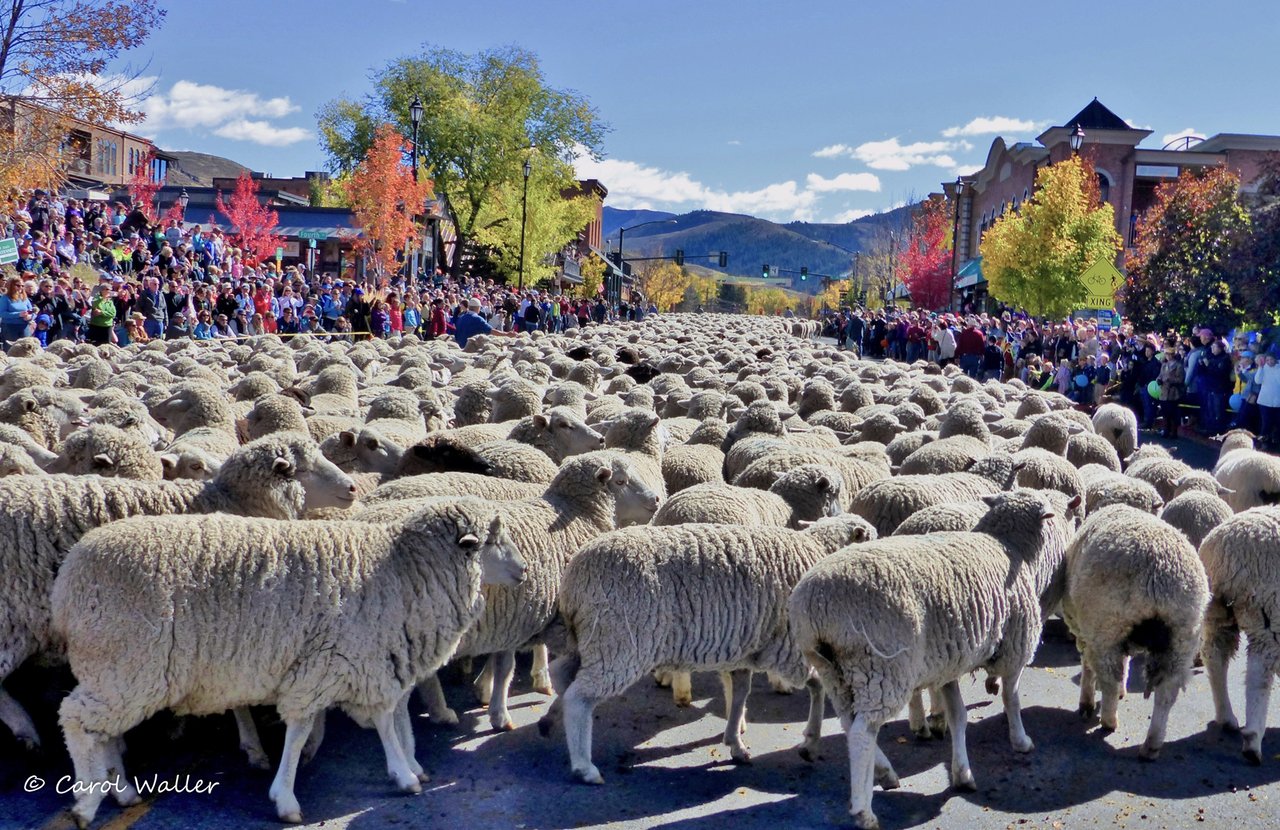
If you're new to the valley, the Big Sheep Parade looks like a piece of theater somebody invented for tourists. Twelve hundred sheep come down Ketchum's Main Street behind a handful of herders and dogs while the crowd presses against the storefronts.
It isn't theater. It's the last visible piece of the industry that built this town — and it's walking the same route it always walked, through a downtown that has completely forgotten why it's there.
The railroad came for silver and stayed for wool
Union Pacific pushed its Wood River branch north from Shoshone to Hailey in 1883, and on to Ketchum in 1884. The rails came for ore. The Warm Springs and Triumph mines were producing, and the valley's whole reason for existing, as far as the railroad was concerned, was getting silver and lead out to smelters.
Then the silver market collapsed in the 1890s. The mines closed. Union Pacific went into bankruptcy. By any ordinary logic, Ketchum should have emptied out the way the Triumph Mine ghost town eventually did.
What saved it was sheep.
John Hailey had brought the first bands into the Wood River Valley in the late 1860s, when Idaho counted around 14,000 breeding sheep statewide. By 1890 that number was 614,000. By 1918 it reached 2.65 million — roughly six times Idaho's human population at the time.
And the infrastructure built for silver turned out to be perfect for wool. The same rails, the same loading points, the same grade down to Shoshone. Ketchum became the biggest sheep-shipping town in the American West, and for a stretch of the early twentieth century, second in the world only to Sydney.
In the first half of the century, hundreds of thousands of sheep a year moved through Ketchum's stockyards — weighed in the weigh house, run through a maze of wooden fences, gates, and chutes, and loaded onto cars at a rail loop on the north edge of town. Fall was the busy season. The bands came down off the mountains and the town filled with noise and dust and the smell of lanolin.
The men who carved the aspens
The herds ran on Basque labor.
Young men from the Pyrenees had been arriving in the American West since the mid-1800s, in growing numbers through the 1880s. Some had come chasing gold and found none. What there was instead was sheepherding — work that asked for months of solitude in high country and didn't much care whether you spoke English. The Basque were known across the industry as steady and reliable, and the Wood River Valley's sheep operations scaled up on the back of that reputation.
Here's the part most people never hear about.
Those herders spent entire summers alone with a band of sheep and a dog. To pass the time, and to leave some proof they'd been there, they carved into the bark of aspen trees. Names. Dates. Home villages. Drawings. Complaints. Poetry. Political arguments with men they'd never meet. Some of it in Euskara, the Basque language, which has no relation to Spanish or French or anything else in Europe.
These carvings are called arborglyphs, and they're still up there. One documented example sits on an aspen in Neal Canyon, about eight miles north of Ketchum. There are others scattered through the drainages the herders trailed.
They're also disappearing, and not slowly. Aspens rarely live past about 150 years. The trees carved in the 1910s and 1920s are at the end of their lives, and when they fall, the record goes with them. Researchers across Idaho are in a genuine race to photograph and catalog what's left before the last of it rots into the duff.
It's the most quietly moving thing in these mountains. A hundred-year-old homesick note, carved by a twenty-year-old from northern Spain, still legible on a living tree a few miles from a town where houses trade in the millions.
How a bike path created the festival
In 1987, Union Pacific pulled up the tracks and ties. The rail bed became the Wood River Trail — the paved path that now runs the length of the valley and is one of the first things buyers ask about when they weigh trail access in a purchase.
And then the two halves of the story collided.
The new bike path crossed working ranch ground. Sheep still trailed through every fall, as they had for over a century. Cyclists began complaining — about the sheep, and more specifically about what the sheep left on the pavement.
John and Diane Peavey of the Flat Top Sheep Company decided the problem was that nobody knew what they were looking at. So in 1996 they invited the public to come walk along with the bands as they moved through the backstreets of Ketchum, and to hear what the trailing actually was. In 1997 they partnered with the local chamber to build it into a multi-day festival.
Thirty years later it draws visitors from around the world, and msn.com has named it one of the top ten fall festivals on the planet. The 2026 edition runs October 7–11 across Ketchum, Hailey, and Sun Valley: the Sheep Folklife Fair, Wool Fest classes, national qualifying sheepdog trials, lamb dinners, storytelling, and the Big Sheep Parade to close it out.
A complaint about droppings on a bike path built on an abandoned sheep railroad is now the reason the sheep still come through town. There's a lesson in that somewhere.
What's standing on the stockyards now
Walk the north end of Ketchum and you're walking the old loop.
The depot, the stockyards, the weigh house, and the turnaround are gone. What replaced them is the light-industrial district — contractor garages, the Big Wood Bakery Café, the YMCA. The ground that once moved hundreds of thousands of sheep a year now holds the trades and services that keep the valley running.
That district is changing again. Ketchum has been reworking its light-industrial zoning, allowing greater building heights in parts of the area in exchange for including affordable units — an attempt to put workforce housing on some of the last developable ground in the city.
Which is the pattern, really. Rails laid for silver got reused for wool. The wool grade became a bike path. The stockyards became the industrial district, and the industrial district is becoming housing. The valley has never had much flat, usable land, so it keeps handing the same ground to whatever the economy needs next.
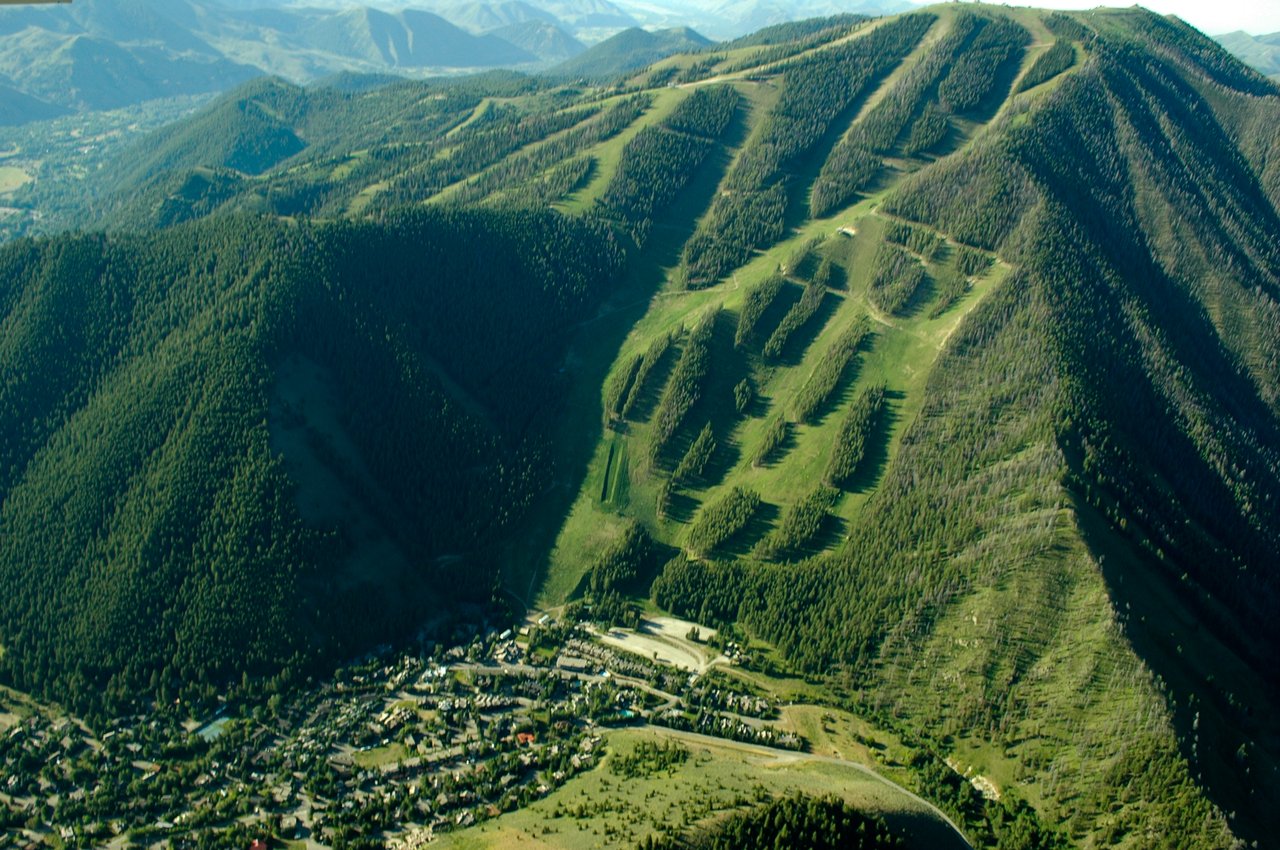
The sheep economy gave way to the ski economy when Averell Harriman's resort opened in 1936 and the world's first chairlift went up on Proctor and Dollar. But the sheep never entirely left. Once a year they come back down the same corridor, past buildings that sit on their old corrals, and for a few hours in October the town looks something like it used to.
If you're here for the festival and find yourself curious about the ground it all happens on — how the valley grew, why it's shaped the way it is, what's buildable and what never will be — that's the sort of thing we talk about with people all the time. Come find us.
Frequently Asked Questions
When is the Trailing of the Sheep Festival in 2026?
October 7–11, 2026, across Ketchum, Hailey, and Sun Valley. It's the 30th annual festival, and it ends with the Big Sheep Parade — roughly 1,200 sheep down Ketchum's Main Street.
Was Ketchum really a major sheep town?
Yes. In the early twentieth century Ketchum was the largest sheep-shipping point in the American West and, for a period, second in the world behind only Sydney, Australia. Idaho's sheep population peaked around 2.65 million in 1918, about six times the state's human population.
What are Basque arborglyphs and can you still see them?
They're carvings Basque sheepherders made in aspen bark — names, dates, drawings, and writing in Euskara — while spending summers alone with their bands. Examples survive in the drainages around the valley, including one documented in Neal Canyon about eight miles north of Ketchum. They're vanishing as the host aspens reach the end of their natural lifespan.
What happened to Ketchum's railroad?
Union Pacific reached Ketchum in 1884 to serve the mines, then carried sheep after the silver crash. The company pulled the tracks in 1987, and the rail bed became the Wood River Trail bike path. The old depot and stockyard site is now Ketchum's light-industrial district.
How did the festival get started?
Cyclists on the new bike path — built on the old rail bed — complained about sheep droppings where the bands still trailed through. Ranchers John and Diane Peavey invited the public to walk along and learn what they were seeing, starting in 1996, and turned it into a festival with the local chamber in 1997.
Image: Visit Sun Valley
About Stevenson Real Estate Group
The Stevenson Group has decades of experience in Sun Valley, and use that historical knowledge to help long-time and new clients achieve their real estate goals. Selling everything from remote mountain lodges in the Sawtooths to luxury estates on the Big Wood River to starter homes in the South Valley, Gayle, Matt and team consistently get the job done like few other agents or teams in the market.